

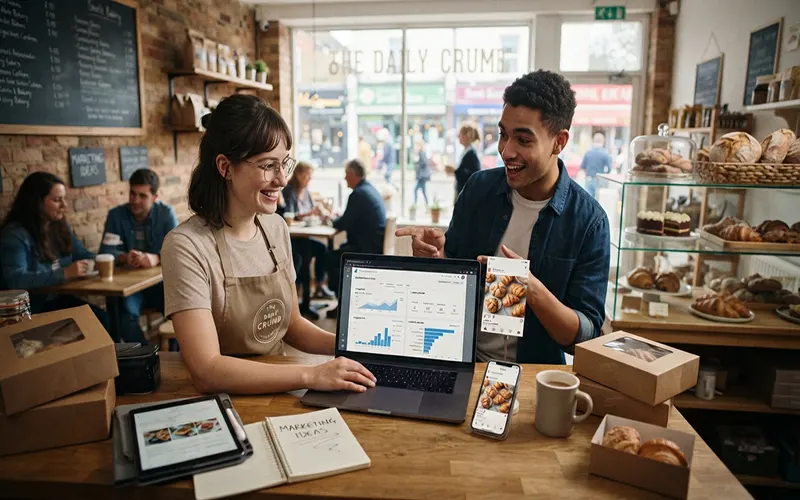
Local small businesses often operate under the assumption that competing in the digital landscape requires a massive corporate ad spend. When a neighborhood bakery or a local plumbing service competes against national chains with deep pockets, trying to outspend them is a losing game. Fortunately, digital advertising does not reward deep pockets nearly as much as it rewards precision, relevance, and local authenticity.
With a shoestring budget and a clear strategy, local businesses can outmaneuver bigger competitors by hyper-targeting the exact neighborhoods and customers they serve. Digital advertising on a budget is not about reaching the most people; it is about reaching the right people right around the corner.
1. Claim and Maximize Your Free Google Business Profile
Before spending a single dollar on paid ads, every local business must lock down its digital storefront. Your Google Business Profile (GBP) is the single most powerful free tool for local discovery, particularly for capturing the coveted Google Local 3-Pack that appears at the top of mobile search results.
Three Pillars to Maximize Your GBP Without Spending Money:
- Complete Every Field: Fill out your business hours, service areas, attributes, and precise physical address. Ensure your categories are specific (e.g., “Artisan Bakery” rather than just “Bakery”).
- Drive Reviews Aggressively: Build a system to ask happy customers for a Google review via text or email within 24 hours of service. Respond to every review—positive or negative—within 48 hours to signal active engagement to the algorithm.
- Leverage Google Posts: Treat your GBP like a mini social media feed. Post weekly updates about seasonal specials, community events, or new products directly to your listing.
2. Hyper-Localized Paid Social Media Ads
When you do allocate a small financial budget to paid media, Meta platforms (Facebook and Instagram) offer the most granular geographic targeting available. National brands waste money on broad targeting; local businesses should use geo-fencing and tight radius targeting—dropping a digital pin around your storefront with a 3-to-5-mile radius.
Instead of running generic brand awareness campaigns, focus ad spend on specific community hooks and low daily budgets of $3 to $5 per day:
- Offer-Driven Creatives: Promote a high-value, low-friction offer, such as a “$10-off first service” or a “free pastry with any drink purchase”.
- Audience Interest Layers: Combine your geographic radius with local interest filters or exclude competitor-heavy zones to ensure your message reaches active community members.
- Mobile-First Visuals: Use authentic, unpolished smartphone photos or short video reels of your actual shop, staff, or products rather than corporate stock imagery.
3. Harness the Power of Local SEO and Content
Paid ads stop running the moment your daily budget runs out, but organic local search engine optimization (SEO) builds long-term equity. Local SEO relies on signaling to search engines that your business is deeply rooted in a specific geographic area.
To capture high-intent local traffic organically, optimize your website copy around location-specific modifiers. Instead of targeting generic keywords like “roof repair,” optimize for “roof repair contractors in [Neighborhood/City Name]”. Create dedicated neighborhood landing pages if you serve multiple distinct suburbs or districts, detailing your work in those specific areas. Maintain a simple blog answering common customer questions unique to your region, such as “How to prepare your [City] home’s pipes for winter freeze”. This builds immediate topical authority and captures hyper-local search traffic searching for localized solutions.
4. Community Cross-Promotions and Micro-Influencers
When ad budgets are tight, collaboration acts as a powerful multiplier. Partnering with complementary, non-competing local businesses allows you to split marketing efforts, cross-pollinate audiences, and eliminate ad costs entirely.
Consider strategic local alliances, such as cross-promotional partnerships where a specialty coffee shop partners with a nearby independent bookstore to offer joint weekend discounts (e.g., show your bookstore receipt for 10% off coffee), promoting this digital-first bundle via collaborative Instagram posts and email newsletters. Furthermore, reach out to local community creators, neighborhood food bloggers, or parent-group leaders who have between 1,000 and 5,000 hyper-engaged followers. Offer them a complimentary service or product in exchange for an honest review or a series of Instagram Stories tagging your business. Their endorsement carries far more trust in the local community than any traditional advertisement.
5. Retention-Focused Email Marketing and Retargeting
Attracting new local customers is only half the battle; keeping them coming back is where profitability lives. Email marketing consistently delivers the highest return on investment of any digital channel because you own the audience data, free from algorithm changes.
Capture email addresses at every touchpoint by offering a modest incentive, such as a digital loyalty punch card or a sign-up discount in-store via a QR code. Once you have captured those emails, automate simple campaigns: a welcome sequence introducing your team and story, a birthday or anniversary reward to drive repeat foot traffic, and a win-back campaign targeting customers who haven’t visited in 60 days. Pair your email efforts with basic website retargeting by installing the Meta Pixel or Google Analytics tag on your website to serve low-cost reminder ads to visitors who left without booking.
Action Plan: Start Small, Stay Consistent
Low-budget digital advertising is not about finding a magic growth hack; it is about consistency and disciplined execution. Do not try to launch all five strategies at once. Pick a single focus for this week—such as optimizing your Google Business Profile and asking your last five customers for reviews—and build from there. Local success is won one neighborhood connection at a time.